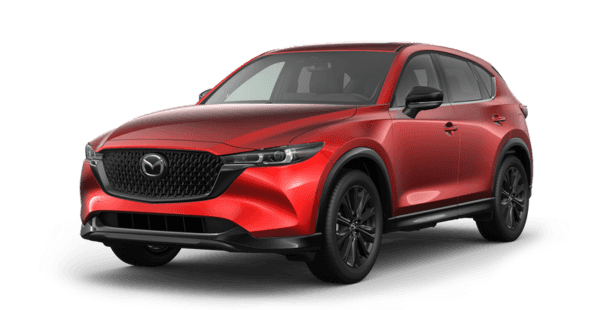
CX-5 vs. Tucson: Powertrain
The 2026 CX-5 and the 2026 Tucson share an identical headline number: 187 horsepower from a 2.5-liter naturally aspirated four-cylinder engine. For most Utah Valley driving, merging onto I-15 or climbing Provo Canyon, both vehicles perform comfortably at that figure. The CX-5 holds a modest torque advantage, 186 lb-ft to the Tucson's 178 lb-ft, and its powertrain is consistently praised for smooth, refined delivery. The Tucson pairs its engine with an 8-speed automatic, compared to the CX-5's 6-speed, which can feel more responsive in stop-and-go traffic due to the closer gear spacing.
The Tucson Hybrid produces a combined 231 hp and the PHEV reaches 268. Neither figure is something the gas CX-5 can approach. Mazda has confirmed a CX-5 hybrid for 2027, built around an in-house SkyActiv-Z powertrain rather than a sourced unit. Until then, buyers who want electrified performance or hybrid fuel savings will find more to choose from in the Tucson lineup.
CX-5 vs. Tucson: Fuel Economy
Comparing AWD-equipped gas models directly, the 2026 CX-5 and the 2026 Tucson AWD both return an EPA-estimated 26 mpg combined. There is no fuel economy penalty for choosing the CX-5. The practical difference is that the CX-5 arrives at 26 mpg with AWD already in the purchase price, while the Tucson AWD requires a roughly $1,500 upgrade from the FWD base to reach the same figure.
Step up to the Tucson Hybrid and the efficiency picture changes significantly: 36 to 38 mpg combined depending on trim, a range the gas CX-5 cannot compete with in 2026. The CX-5 hybrid is confirmed for 2027. For buyers who want to minimize fuel costs right now, the Tucson Hybrid is one of the stronger values in the compact SUV segment. Actual mileage will vary with conditions and driving habits.
CX-5 vs. Tucson: Tech & Interior
The 2026 CX-5 gets a 12.9-inch Google Built-In touchscreen as standard equipment on every trim, the first Mazda ever to run native Google software. Google Maps, Google Assistant, and the Google Play Store operate without a connected phone. The top Premium Plus trim upgrades to a 15.6-inch display, the largest Mazda has ever fitted to a production vehicle. A 10.25-inch digital instrument cluster and an expanded head-up display are part of the same package.
The Tucson's standard 12.3-inch touchscreen is sharp and well-integrated, with wireless Apple CarPlay and Android Auto available on every trim. Hyundai's panoramic curved display combines the infotainment screen and instrument cluster into a single sweeping unit that looks genuinely impressive in person. The functional gap between the two systems comes down to dependency: the Tucson's navigation and app experience relies on your phone, and the CX-5's does not.
Interior quality is where the CX-5 builds its clearest lead in this comparison. Soft-touch materials cover the doors and dash, available Nappa leather appears on Premium trims, and ambient door-panel lighting sets a tone you don't often find at this price point. Auto reviewers consistently compare the CX-5 cabin to near-luxury vehicles. The Tucson is well-built and genuinely comfortable, particularly on mid and upper trims with H-Tex leatherette or genuine leather, but it prioritizes cargo space and practicality over feel. Sitting in both back to back makes the gap apparent.
CX-5 vs. Tucson: Warranty & Ownership
The Tucson holds a clear and genuine advantage on coverage. Hyundai backs the Tucson with a 5-year/60,000-mile basic warranty and a 10-year/100,000-mile powertrain warranty, the longest powertrain warranty offered by any mainstream brand in this segment. The CX-5 carries 3-year/36,000-mile basic coverage and a 5-year/60,000-mile powertrain warranty. For buyers who plan to own past 100,000 miles, that gap is meaningful and worth factoring into the decision.
The CX-5 makes up ground on reliability reputation. KBB owner reviews for the current CX-5 generation consistently land at 4.5 out of 5, and the nameplate has spent years near the top of compact SUV reliability rankings. The Tucson earns strong owner ratings as well. Neither vehicle includes complimentary scheduled maintenance nationally; check with Orem Mazda for any current service offers.
CX-5 vs. Tucson: Safety
Both vehicles take a thorough approach to standard safety technology. The 2026 CX-5 includes Rear Automatic Emergency Braking, Rear Cross-Traffic Braking, Blind Spot Assist, Emergency Lane Keeping, Traffic Sign Recognition, and Radar Cruise Control across all trims with no upgrade package required. The 2026 Tucson comes standard with Hyundai SmartSense across its full lineup, covering Forward Collision-Avoidance Assist, Lane Keeping Assist, Driver Attention Warning, Blind-Spot Collision Warning, and Rear Cross-Traffic Collision-Avoidance Assist. On safety technology availability, this comparison is a draw, and both buyers end up well-equipped from the base trim up. Official 2026 CX-5 IIHS and NHTSA ratings were pending at time of publishing; confirm current results with Orem Mazda.
Frequently Asked Questions
Does the 2026 Mazda CX-5 come standard with AWD?
Yes. i-Activ AWD is standard on every 2026 CX-5 trim at no additional charge. The 2026 Tucson SE starts in front-wheel drive, and adding AWD on a gas trim costs approximately $1,500. Once you price both vehicles with AWD, the starting price gap between them narrows considerably. For Utah winters and Wasatch canyon driving, having that all-weather capability built into the purchase price is a practical advantage.
Which has the better touchscreen, the CX-5 or the Tucson?
The 2026 CX-5 ships with a 12.9-inch Google Built-In touchscreen as standard equipment across all trims, larger than the Tucson's standard 12.3-inch display. The more important distinction is how each system works: the CX-5 runs Google Maps and Google Play natively without requiring a paired phone, while the Tucson's system depends on wireless CarPlay or Android Auto mirroring. The top-trim CX-5 Premium Plus upgrades to 15.6 inches.
Does the CX-5 or the Tucson get better fuel economy?
Comparing AWD gas models, both the 2026 CX-5 and the 2026 Tucson AWD are EPA-estimated at 26 mpg combined. That is a true tie. The CX-5 includes AWD in the purchase price; the Tucson AWD adds approximately $1,500 to get there. The Tucson Hybrid earns 36 to 38 mpg combined, well above either gas model, and that powertrain is on sale now. The CX-5 hybrid arrives for 2027.
How does the Hyundai Tucson's warranty compare to the Mazda CX-5?
The Tucson has a significant advantage here. Hyundai covers the Tucson with 5 years/60,000 miles of basic coverage and 10 years/100,000 miles on the powertrain, the longest powertrain warranty from any mainstream brand in this segment. The CX-5 carries 3 years/36,000 miles of basic coverage and 5 years/60,000 miles on the powertrain. Buyers who plan to keep their vehicle well past 100,000 miles should weigh that gap carefully.
Is the 2026 Mazda CX-5 available as a hybrid?
The 2026 CX-5 is available only with the 187-hp 2.5L naturally aspirated four-cylinder and standard AWD. Mazda has confirmed a CX-5 hybrid for the 2027 model year, using an in-house SkyActiv-Z powertrain. For buyers who want hybrid or plug-in hybrid efficiency in their next vehicle today, the Tucson Hybrid and Tucson PHEV are the practical alternatives to consider.
Where can I test drive a 2026 Mazda CX-5 near Orem or Provo?
Orem Mazda serves shoppers from across Utah Valley, including Provo, Springville, Pleasant Grove, and American Fork. You can browse current CX-5 inventory, compare trims, value your trade, or schedule a test drive directly on our website.